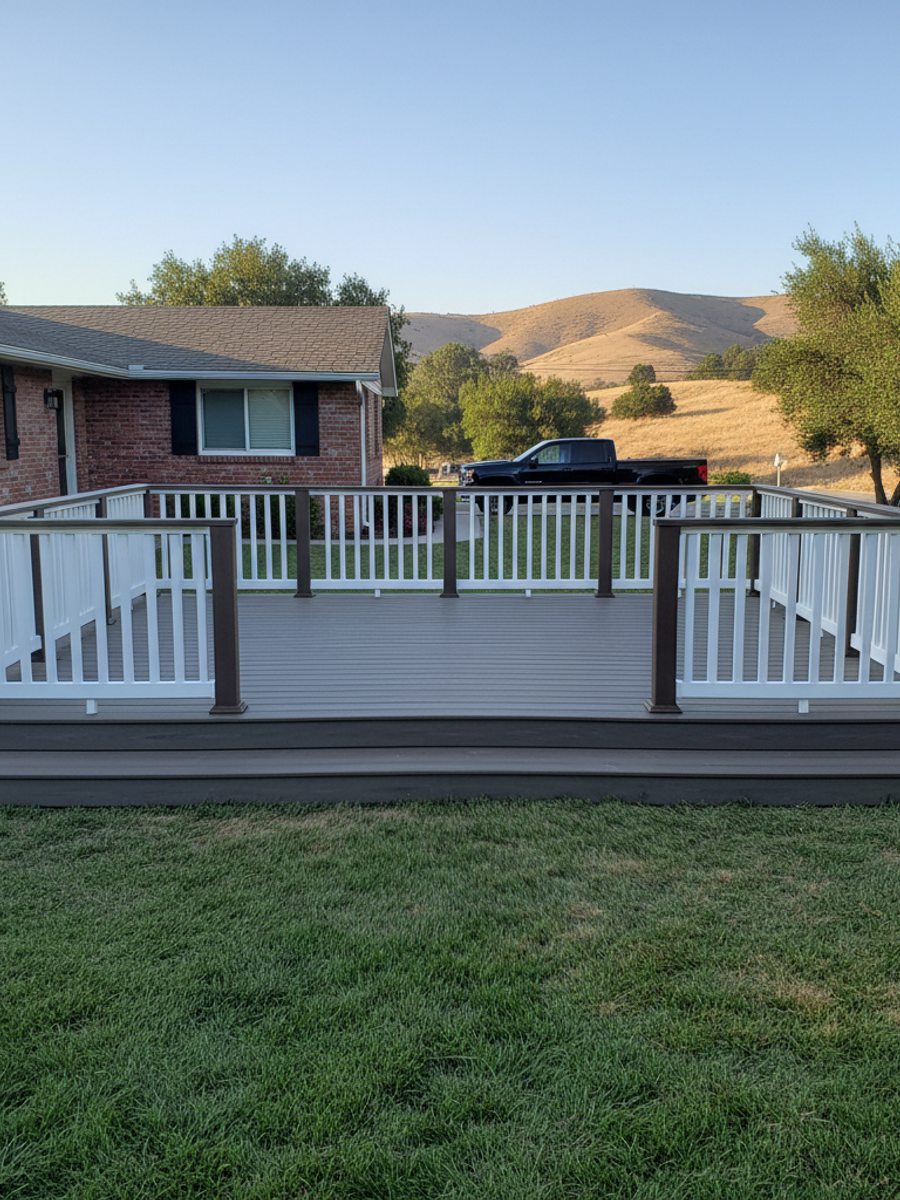
Huntington Beach is hard on decks in ways that inland cities don't deal with. Salt air off the Pacific corrodes fasteners that would last decades in Riverside. UV exposure here is close to year-round, not seasonal. And a lot of the housing stock along Main Street, the Downtown grid, and older sections of Huntington Beach was framed in the 1950s and 60s, back before anyone was thinking about coastal-grade hardware. So picking a deck builder here isn't just about who quotes the lowest number. It's about who understands what this specific coastline does to lumber, metal, and concrete over time.
Ask what hardware they're using before you ask about wood species
The single biggest failure point on any deck, anywhere, is the ledger board, the piece that bolts the deck to the house. If it's attached with nails instead of lag bolts or through-bolts, or if the flashing behind it is missing or installed wrong, water gets behind it and rots the rim joist from the inside. You won't see it until the deck sags or, worse, pulls away from the house with people standing on it. That's how most deck collapses actually happen, not from old wood snapping, but from a ledger connection that was never right to begin with.
In a marine environment like Huntington Beach, standard galvanized fasteners aren't enough. Salt air eats through them faster than it would forty miles inland. Ask specifically whether they're using stainless steel or hot-dip galvanized hardware rated for coastal or treated-lumber contact, and whether joist hangers get the same treatment. A builder who hesitates on that question, or who says "standard hardware's fine here," doesn't have the coastal experience they're claiming.
Permits aren't optional, and in parts of HB they're a two-step process
Most deck work over 30 inches off grade needs a permit through the City of Huntington Beach Building Division, and that's true whether you're building new, replacing framing, or doing a full structural repair. The inspector will want to see the footings before they're poured, then come back for a framing inspection before the decking boards go down, and a final once railing and stairs are in. Skipping this isn't a shortcut, it's a liability you're stuck holding when you sell the house and the buyer's inspector flags unpermitted work.
If your property sits within the Coastal Zone, which covers a good stretch of Huntington Beach close to PCH and the bluffs, exterior work can also trigger a Coastal Development Permit on top of the standard building permit. A builder who's done work in Huntington Harbour, Seacliff, or the areas near Bolsa Chica should already know whether your address falls into that overlay. If they've never heard of it, that's worth noting.
HOAs are common in the newer planned communities, Parkside Estates, Brightwater, parts of Seacliff, and they usually want a design review before anything goes to the city. Get that timeline in writing up front, because an HOA approval can add two to four weeks before a permit application even gets submitted.
What the ground under the deck is actually doing
Closer to the coast, soil tends to be sandy and drains fast, which is good news for footings, standing water isn't usually the problem it is on clay soils inland. But sandy soil also compacts less predictably, so footing depth and diameter matter more than people think. A builder should be sizing footings to the actual post spacing and load, not pouring the same 12-inch sonotube on every job because that's what they've always done. Huntington Beach doesn't have a frost line to worry about like colder climates do, but footings still need to bear on undisturbed, properly compacted soil, not on loose fill from an old landscaping job.
On older lots near downtown or the Huntington Beach flats, there's also a decent chance of finding old irrigation lines, abandoned footings from a prior structure, or fill soil nobody documented. A builder who's worked this area for a while expects that and budgets time for it. One who's mostly worked new subdivisions might not.
Composite, wood, and what the sun and salt actually do to each
Composite decking has gotten a lot better over the last decade, and in a UV-heavy, salt-air environment it often makes more sense than wood, less fading, no annual staining, no risk of splintering from repeated wet-dry cycles. But not all composite is equal. Cheaper capped polymer boards can still fade or chalk faster under constant coastal sun than the manufacturer's brochure suggests. Ask what brand they're installing and what the actual warranty covers, fade and stain warranties are usually shorter than structural warranties, and that distinction matters.
If you're going with real wood, cedar and redwood hold up better to moisture than pressure-treated pine, but pressure-treated is more common because it's cheaper and more available locally. Either way, wood decking within a mile or two of the water needs sealing on a tighter schedule than the same deck would inland, closer to every 12 to 18 months instead of every two to three years, because salt spray breaks down finish faster than plain rain does.
What to walk away from
- No license number offered without you asking twice. California requires a C-13 or B license for deck construction depending on scope, and it should be easy for them to give you.
- A quote with no line item for permits, or a builder who tells you permits "aren't really needed" for a raised deck. That's not a cost-saving tip, it's a warning sign.
- Vague answers about fastener type, footing depth, or ledger attachment. If they can't describe how the deck connects to your house, they haven't thought about the part that actually fails.
- Pressure to sign same-day with a discount that expires tonight. Real contractors are usually booked out, not desperate to close before you think it over.
- No mention of inspections at all. A legitimate build in Huntington Beach goes through at least a footing inspection and a final, sometimes a framing inspection in between. If a builder plans to skip that step, ask why.
None of this is complicated once you know what to ask, it just isn't information most homeowners run into until something's already gone wrong. If you want a straight answer on hardware, footing sizing, or what permit path your address falls under, that's the kind of conversation worth having before any wood gets ordered. You can see the range of work we do, from framing repairs to full custom builds, at Coastal Deck Solutions.